Press
The New York Times · 2016
It Turns Out Spending More Probably Does Improve Education
Coverage of the evidence on school spending and long-run student outcomes.
A curated selection of public commentary and talks, followed by the full press and media archive.
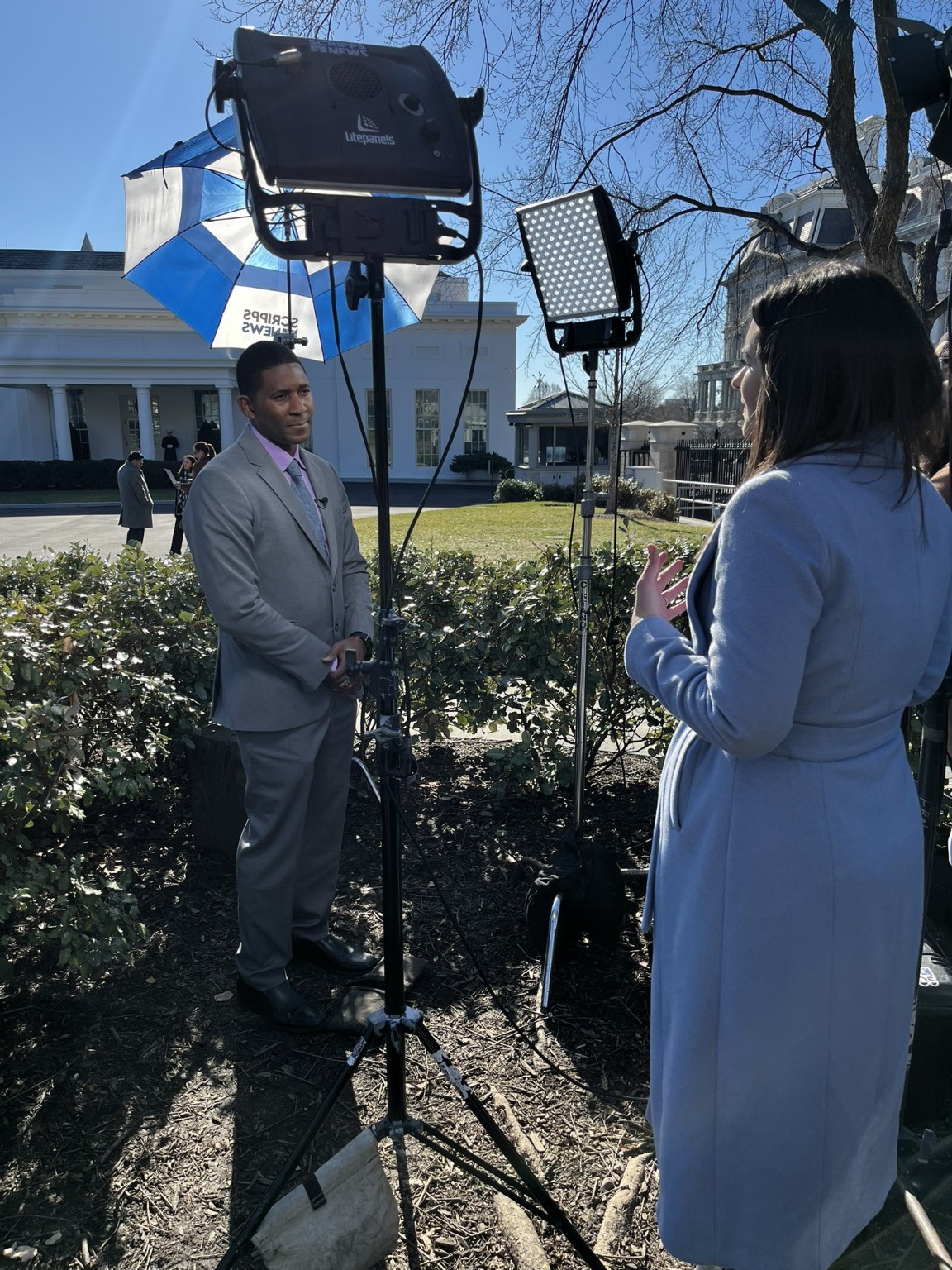 Media interview outside the White House
Coverage of the evidence on school spending and long-run student outcomes.
Paul Tough on the research that shaped how he understood student success.
Coverage of the appointment as a Member of the White House Council of Economic Advisers.
Keynote lecture on how school resources, organization, and quality affect student outcomes.
Discussion marking the tenth anniversary of the Every Student Succeeds Act.
Studio appearance discussing the federal restructuring of the U.S. Department of Education and its effects on school funding and civil-rights enforcement.
Video segment on how U.S. education policy may shift, identified as former economic advisor to President Biden.
Journalist Paul Tough on discovering Jackson's North Carolina noncognitive-skills research while writing Helping Children Succeed.
Paul Tough discusses Jackson’s research on measuring teachers’ effects on noncognitive outcomes and why it offers a different way to assess what schools and teachers contribute.
Long-form interview covering court-ordered spending research, what test scores miss, and curriculum resources.
Published after the appointment as a Member of the White House Council of Economic Advisers, summarizing the Chicago high-schools research on which students benefit most from effective schools.
Announcement of the appointment as a Member of the White House Council of Economic Advisers, describing Jackson as a labor economist whose research advocates robust public spending on schools.
On the appointment signaling continued White House focus on education funding as a policy priority.
Profile on the appointment as a Member of the White House Council of Economic Advisers, covering his academic career and research focus.
Coverage of the appointment as a Member of the White House Council of Economic Advisers, filling out the three-member council.
On the appointment and Jackson's history as a contributor to the publication.
Campus conversation reflecting on his tenure as a Member of the White House Council of Economic Advisers, including work on the childcare stabilization program during COVID-19.
Opinion essay drawing on research showing that parents respond to dimensions of school quality that standardized tests do not fully capture.
Audio segment on the long-run effects of greater school spending for children from low-income families.
Commentary on how investments in public schools can yield broader economic benefits, reflecting the school-finance research agenda.
Coverage of evidence that increased public-school funding improves student outcomes.
Article discussing evidence from Advanced Placement incentive programs and the debate over paying students for academic performance.
On how school spending builds social-emotional skills that don't show up in test scores.
Coverage of the NBER meta-analysis: “by and large, the question of whether money matters is essentially settled.”
Follow-up on the Jackson & Mackevicius meta-analysis: $1,000/student led to test-score gains and a 2-point graduation boost.
Coverage of the 13-study review contrasting with earlier skepticism from Eric Hanushek.
On school-finance-reform research showing spending increases lead to better long-run outcomes, especially for low-income students.
Op-ed touching on school spending and long-run student outcomes.
Newsletter briefing on school funding and achievement gaps.
Feature on the drivers of student underperformance.
Profile of Jackson’s school-finance and teacher-effectiveness research, including assessments of its influence on education policy.
Chaired by Alejandra Mizala (Universidad de Chile). Explains how building better schools improves the quality of education provided.
On why investments in children are most cost-effective when they start early and are sustained throughout childhood.
On “What is a Good School, and Can Parents Tell?” and the multidimensionality of school quality.
On the Trinidad and Tobago single-sex school conversion study, using a diff-in-RD design.
Jackson's North Carolina noncognitive-skills study is central to the book's chapter on “Building Blocks.” Tough calls the creation of a proxy measure for student engagement “Jackson's conceptual breakthrough.”
About the book →#1 New York Times bestseller. Jackson's research is featured among the studies of performance and expertise discussed in the book.
About the book →National bestseller on behavior change by the Wharton professor and Choiceology host. Jackson's research is featured among the studies discussed.
About the book →